Előadások / Szigligeti Társulat / 2026-2027
Kai Hensel
Klamm háborúja
Osztályterem-színház
Forditó:
http://www.klammtanarur.webs.com/
Elõadásunkat középiskolai osztályoknak, jelenlegi, volt és leendõ diákoknak , tanároknak ajánljuk – bíztatásként, hogy még azért is…
A diákoknak szóló színházi mûfaj iskolákban, osztálytermekben szembesíti a tanulókat azokkal a sajátos problémákkal, melyekkel a mindennapi iskolai élet során találkoznak. Szórakoztatva, elgondolkoztatva segít fejleszteni a tizenévesek kommunikációs-, konfliktuskezelõ- és empatikus készségét, valamint a színházi élmény jobb megértését, feldolgozását.
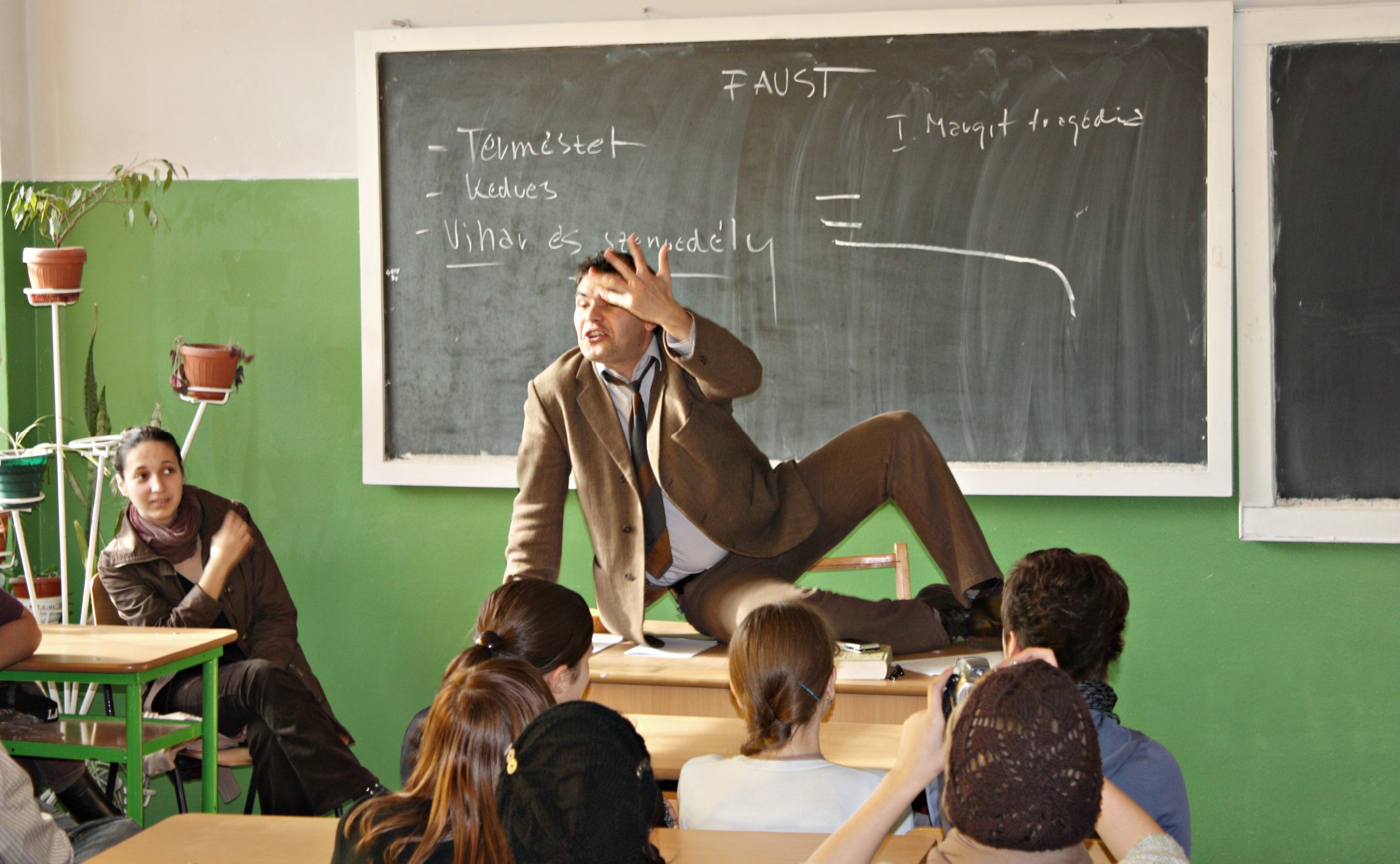
Ennek az elõadásnak a “díszletét” a helyszín vagyis a környezõ valóság képezi. A klasszikus színész-közönség viszony eleve megbomlik a játék- és a nézõtér összeolvadásával. A tantermi közeg azonban, amelyben – ellentétben a színházzal - a nézõk érezhetik otthon magukat, még inkább olyan megnyilvánulásokat válthat ki a tanulókból, melyek a „vendégül látott" színész spontaneitását, improvizációs képességeit teszik próbára.
Egyre több pedagógus és színházi szakember ismeri fel, hogy a színmûvészet segítségével eleddig tabunak számító témák is sikeresen feldolgozhatóvá válnak a tizenévesek számára.
A osztálytermi színházi elõadás nem drámafoglalkozás, nem tornatermekben turnézó utazószínház vagy "rendhagyó irodalomóra", de nem is dramatikus osztályfõnöki óra. A mûfaji meghatározás olyan elõadásra utal, melyben a drámai hatást fokozza, hogy a "sûrített valóság", vagyis a fikció valódi helyszínen kerül bemutatásra.
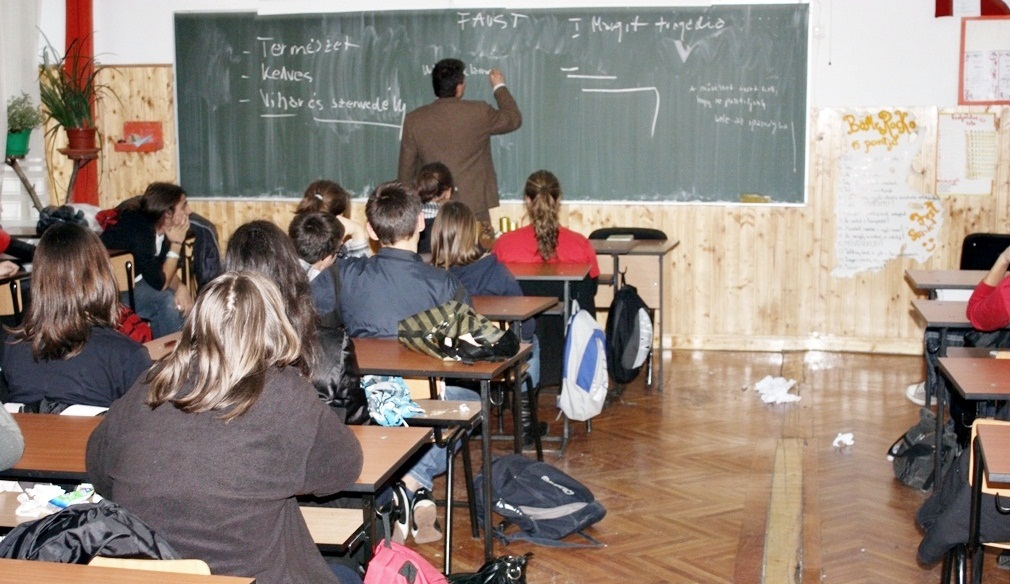
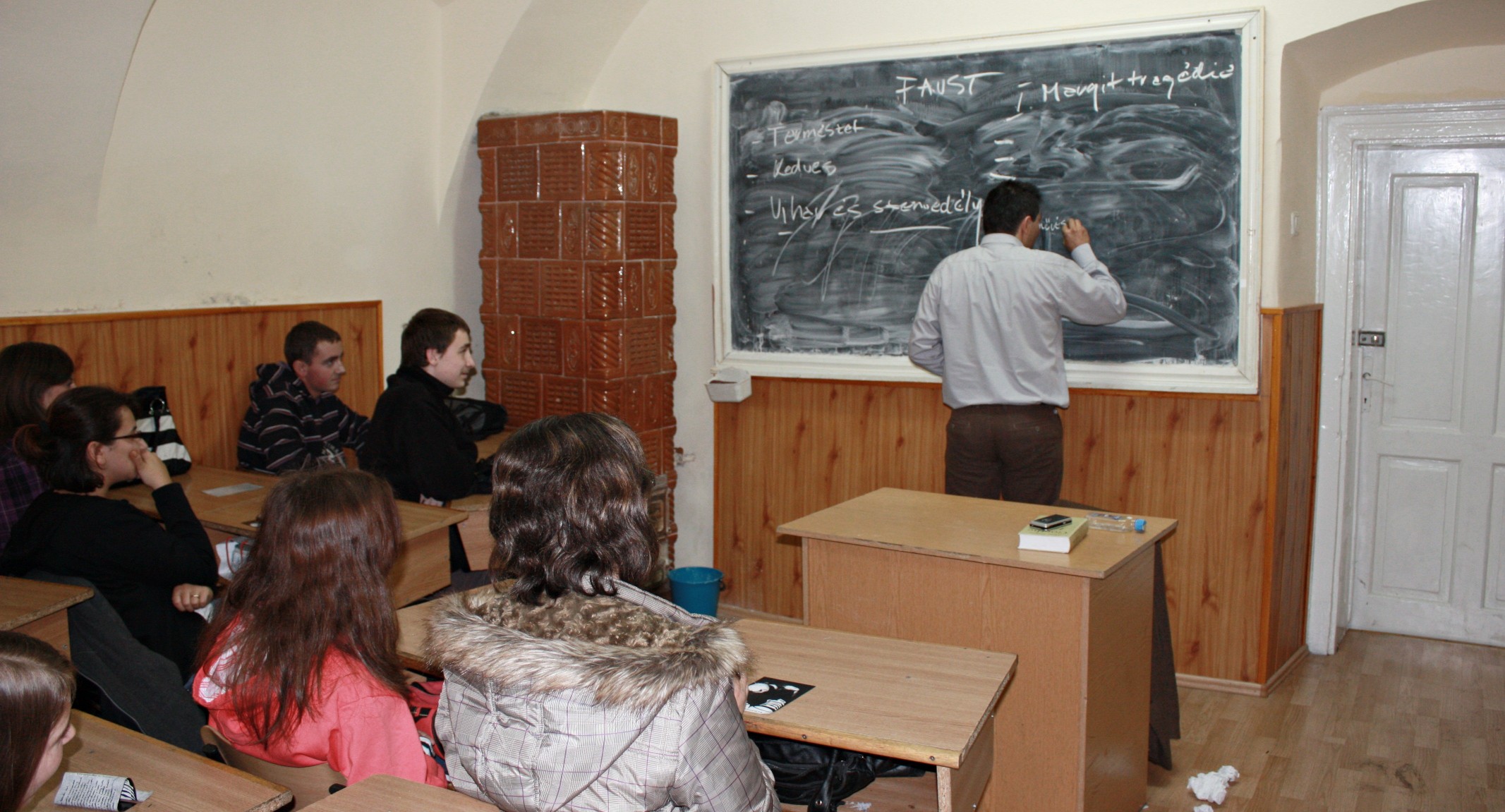
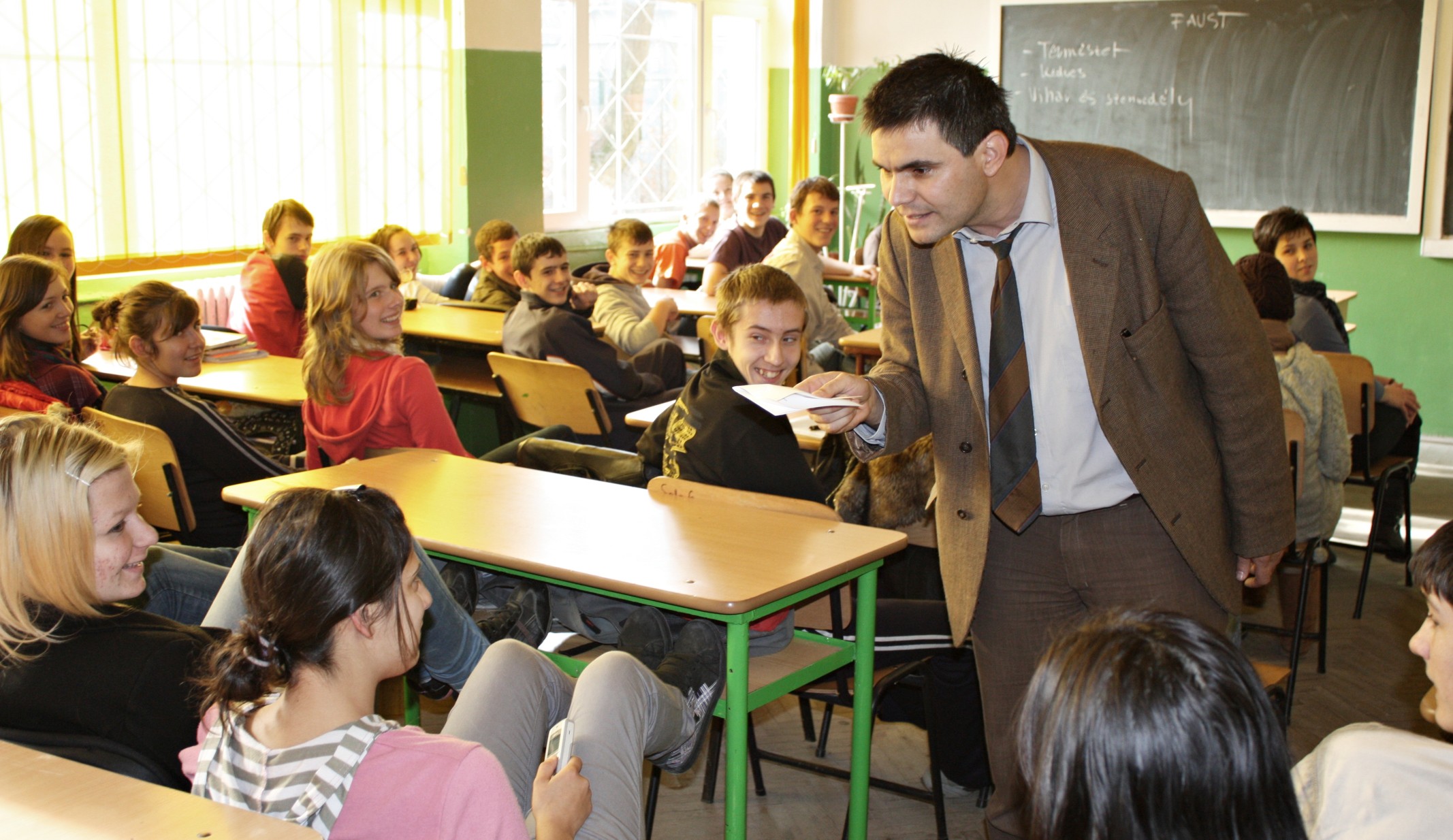
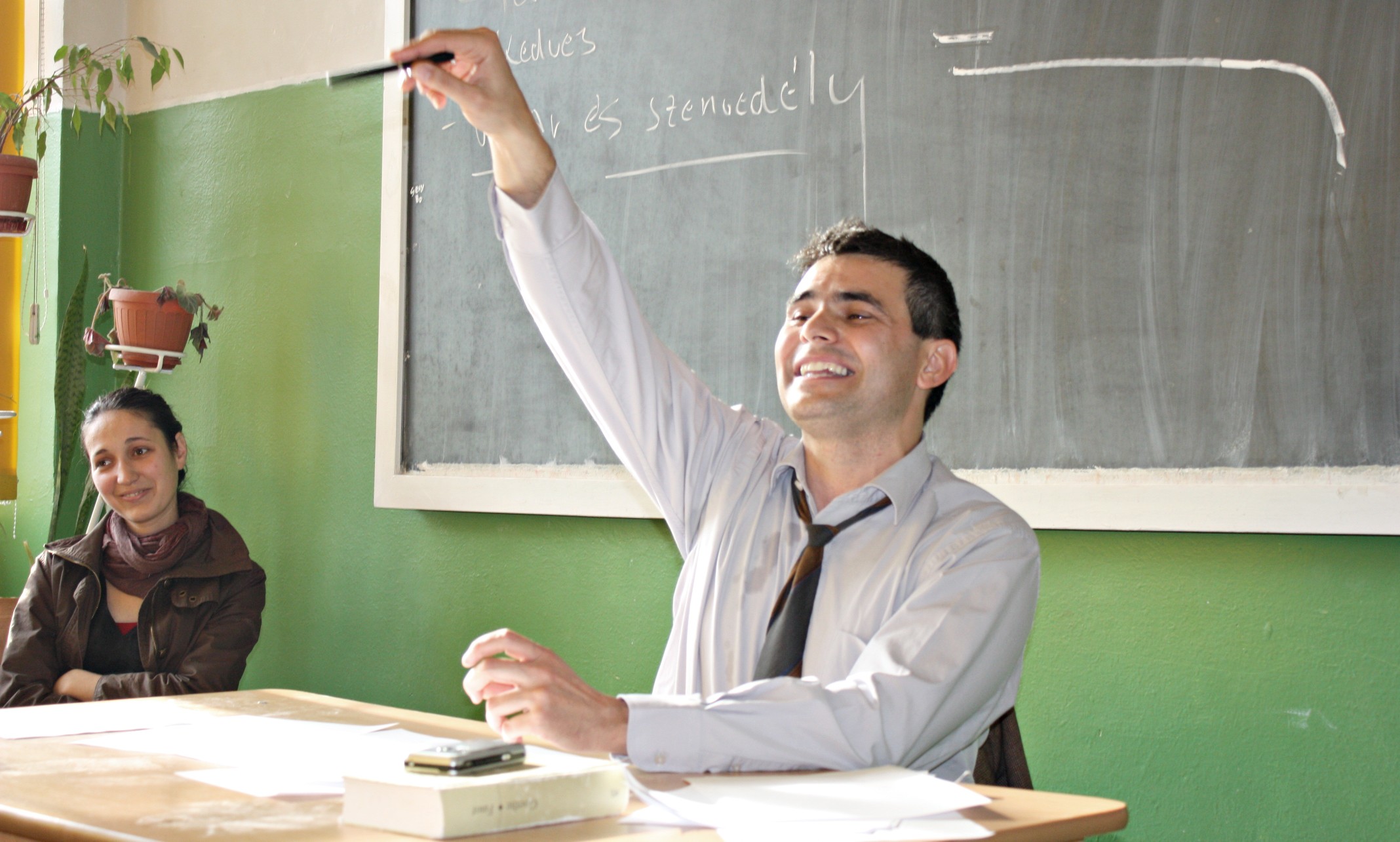
A Klamm háborúja kifejezetten tantermi bemutatásra szánt elõadás.
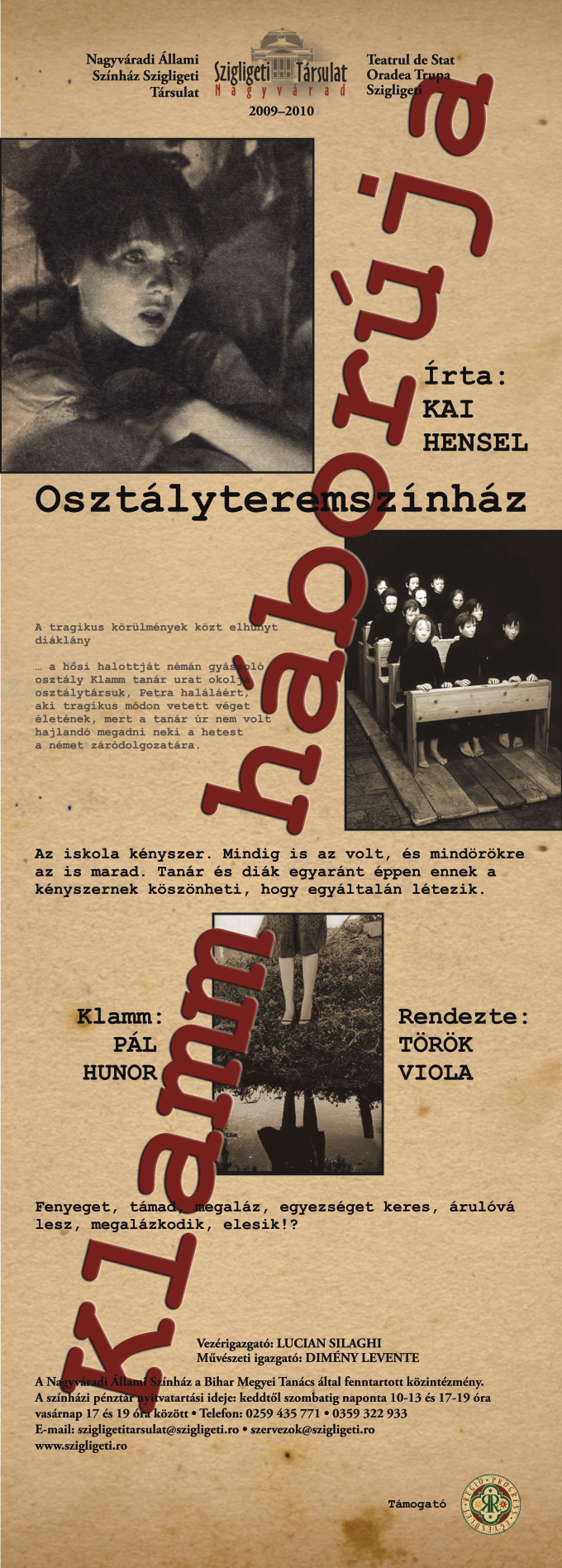
Klamm háborúja
Kai Hensel kortárs német drámaíró monodrámája 2002-ben megkapta a Német Ifjúsági Színházi díjat.
Egy tanár és egy osztály különös háborújának története, az iskola harcterérõl, a tanári létezés mibenlétérõl, és nem utolsó sorban a munka és az elhivatottság közötti dimenzionális különbségrõl.
Egy osztály levélben tudatja némettanárával, Klamm tanár úrral, hogy õt tartják felelõsnek az érettségi elõtt öngyilkosságot elkövetõ iskolatársuk haláláért. Hadüzenetükben teljes ellenállást, igazi passzív rezisztenciát hirdetnek. Klamm megpróbál a normális iskolai keretek között tovább tanítani, ám ebben az osztályban ez már nem lehetséges. Majd õ is meghirdeti saját háborúját, immár az egész iskola, valamennyi kollégája és az igazgató ellen. Jelenetrõl jelenetre foszlik le az elvárásoknak megfelelõ viselkedés és modor hõsünkrõl, aki végképp elveszítve a talajt lába alól, olyan tabukat is néven nevez, melyek az iskolai konvenciók alapjait kérdõjelezik meg.
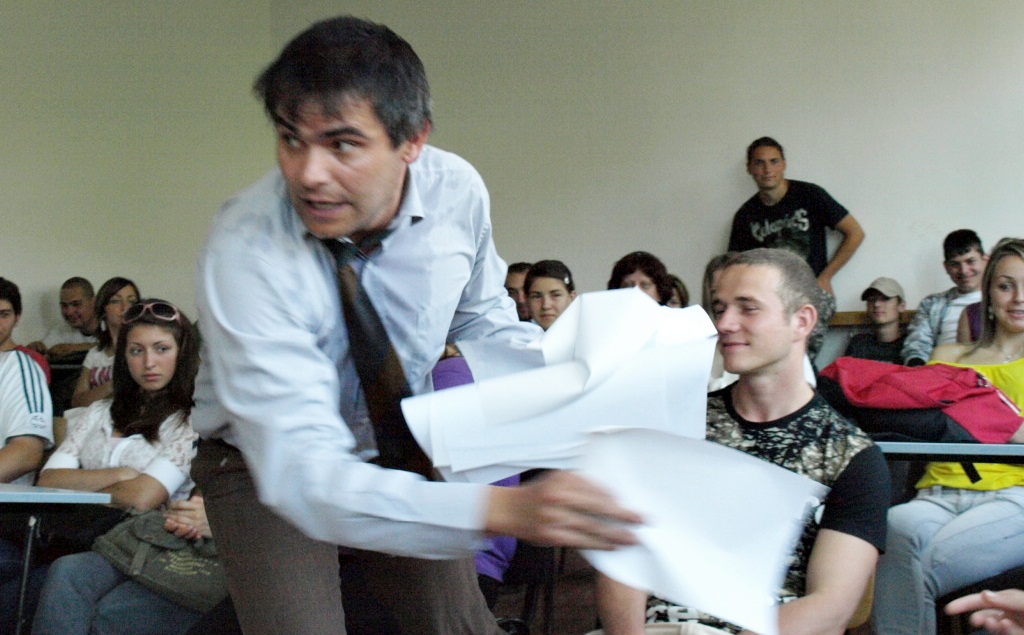
A dráma nem monológ, hanem egy dialógus a tanár és a diákok között, ahol minden indirekt módon derül ki. Az osztály szerepét tulajdonképpen a nézõk “játsszák”. Klamm a legkülönbözõbb módszerekkel próbálkozva arra szertné bírni a diákokat, hogy felejtsék el ezt a látszólagos összefüggést az öngyilkos lány és a megérdemelt osztályzat között. A háborúban fellelhetõ minden eszközzel próbálkozik.
Az osztály nem válaszol semmire, nem kommunikálnak a tanárral, nem tanulnak, és minden szinten bojkottálják. Ezt a szerepet a nézõk tökéletesen játsszák. Hallgatással felelnek a tanár kérdéseire, kijelentéseire, fenyegetéseire – Klamm éppen ettõl a tüntetéstõl csavarodik be. A tanár folyamatosan kommunikálni akar: elõször megpróbálja lesöpörni a lázadást, aztán megpróbálja maga mellé állítani a gyerekeket, és egyéb technikákkal egyezségre bírni õket. Fenyeget. Támad. Megaláz. Egyezséget keres. Árulóvá lesz. Megalázkodik. Elesik….!!??
Szereplők:
Elõadó
Rendező:
Bemutató: 2009.11.16