Performances / Szigligeti Company / 2026-2027
Stanisław Ignacy Witkiewicz
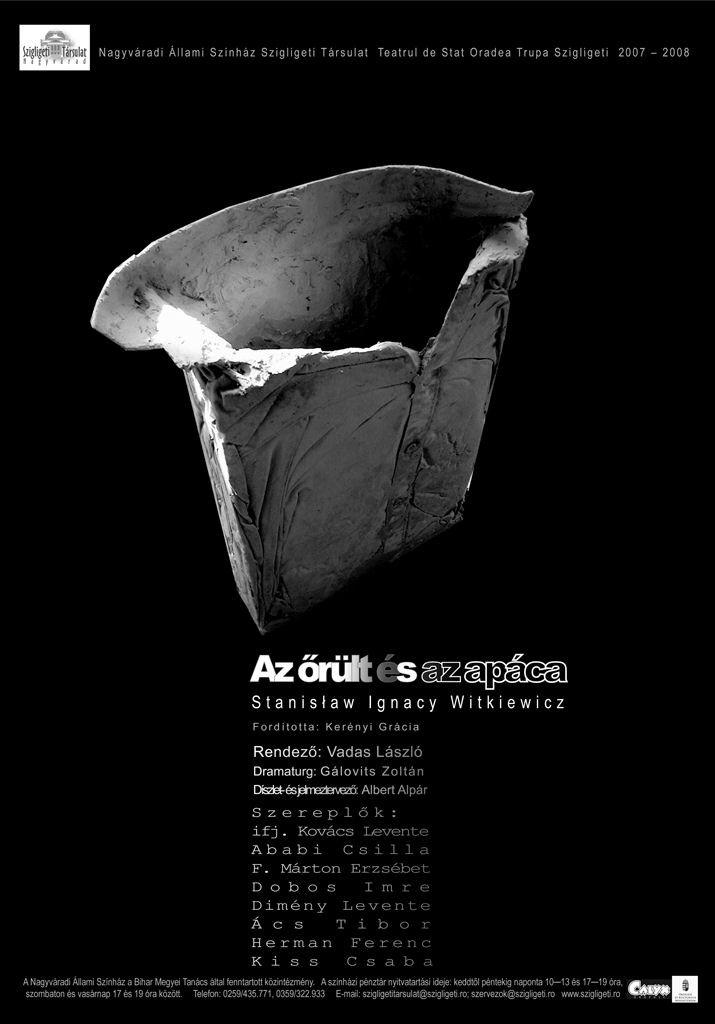
The Madman and the Nun
play
Translated by:: Grácia Kerényi
Witkiewicz (1885–1939), who signed his works as Witkacy, was a pioneer of absurd drama, but he also made significant contributions as a painter, photographer, philosopher, and theorist. As a child, he was educated at home by his parents, who used their methods. He learned to play the piano from his mother and to paint from his father, understandably so because the most famous professors of the time were frequent guests at his parents' house, so it is no wonder that he wrote a short play at the age of eight, had a solo exhibition in his adolescence, and was already working on his philosophical system at that time. His contemporaries considered him more of a madman than a genius thinker, so it was only decades after his death that his works had a truly significant impact.
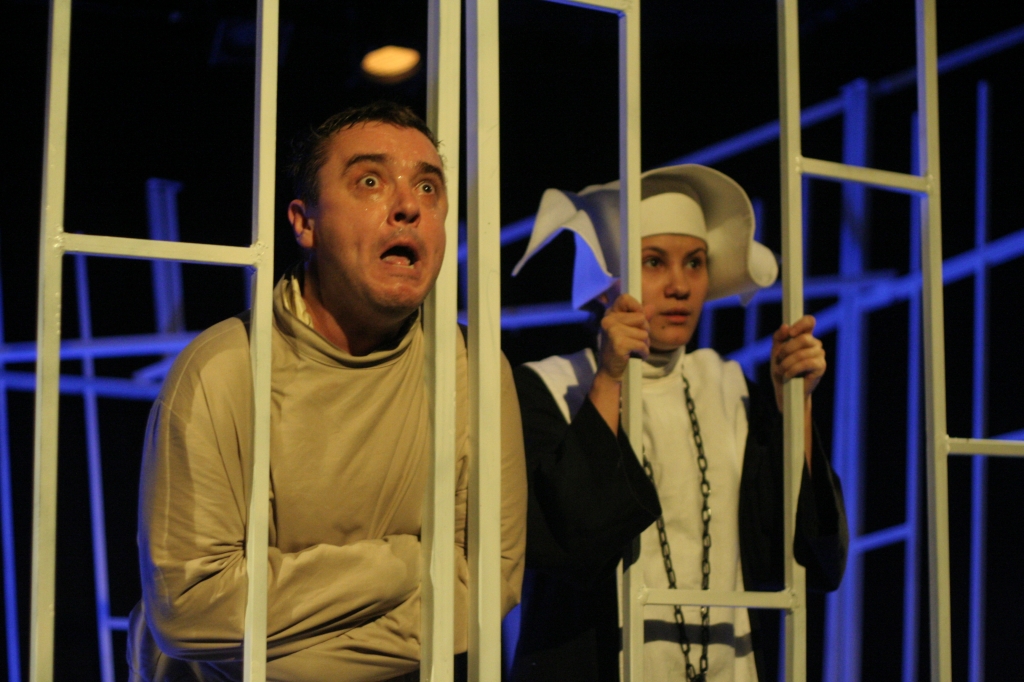
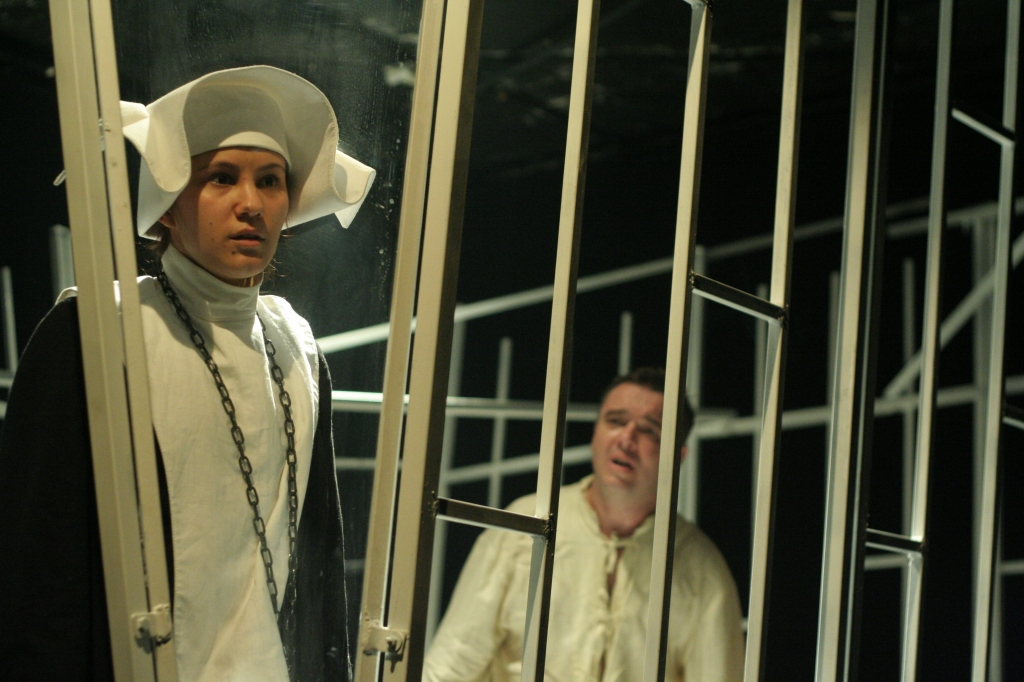
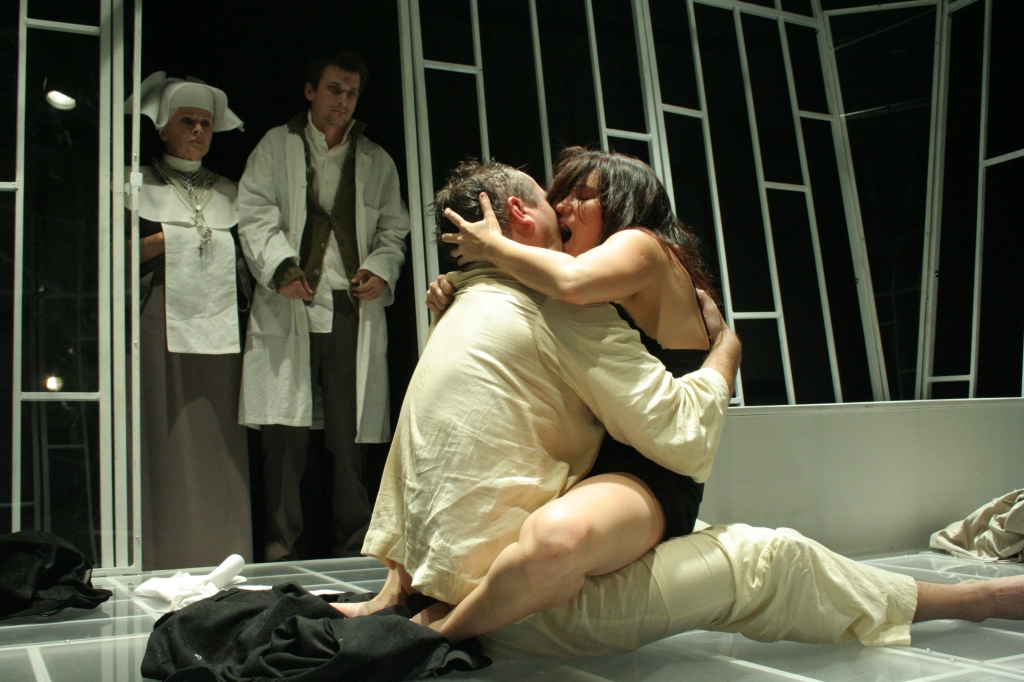
According to Witkiewicz, the world has become a mass of soulless automatons. Nothing can replace the metaphysical experience anymore. Neither philosophy nor religion is capable of this; art is the only thing that can stop the catastrophe. The Madman and the Nun is an autobiographically inspired work set in an unreal space (a mental institution called “To the Dead Rabbit,” in the cell of the raving mad), where Walpurg, the mad poet, is being treated. In this space, peculiar figures from the church and science appear, who want to resolve Walpurg's complex.
To be together, to dissolve into the unknown, to free ourselves from our limitations and fears. To recognise each other, even as madmen, to accept each other, even if our actions are irrational. Breaking free from constraints and escaping guilt is difficult and comes at a price, even if it helps us take off the straitjacket. Who are the madmen, and how mad are they? Where is the boundary between normality and madness? Can these two things be separated from each other? If so, how? Witkiewicz shows us the madman and the nun, then removes the walls. He does not destroy them, but opens a door to the unknown.
Synopsis translated by: Vivien-Tamara Sárközi.
Cast of characters:
0:
0:
0:
0:
Premier: 2007.11.24